on Cruel Hands and domestic violence
on this and that, #2 April 2026
on this and that, #2 April 2026
What would I have done if I were her?
What would I do if I were pushed to my limit?
What does ‘breaking point’ look like?
These are the types of questions I asked myself after watching Al Kalyk’s debut feature Cruel Hands. The evocative film follows Maria and her young son Dai, who flee to an abandoned farmhouse surrounded by forestation, deep in bushfire country. The duo are hiding from Maria’s abusive husband, Jason, who will do whatever it takes to find them. Set against the backdrop of the 2019 bushfires, tensions rise, and Maria is pushed to her limit time and time again, becoming increasingly desperate and erratic with each blow.
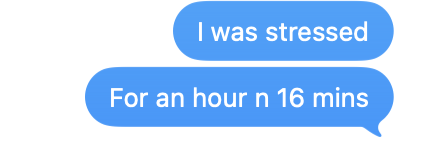
As an audience, you observe the impact of being constantly surveilled as the psychological strain starts to deteriorate Maria's “rationality” (really, what is rational in a domestic violence context?), replacing it with erratic desperation. Short and well crafted, I for one was incredibly stressed for an hour and 16 mins. As indicated in my post-film messaging to Matthew:
It’s easy for Australians to watch a film like this and root for Maria and Dai. That is who you are set up to support, and frankly, as you should! Jason (the abusive husband and father) sucks ass, and we do not like him (as you’ll discover when you GO AND SEE IT.) However, in saying that, although I believe Australians will support victims of domestic and family violence (DFV), I would argue that Australia as an institution and specifically the legal system, does not.
Self-defence is legal throughout Australia; however, the definition of ‘defence’ varies based on which state or territory you are in. For example, (in the context of family violence), Victoria and Western Australia do not require self-defence to occur in response to an imminent attack for a self-defence argument to succeed. Other states and territories, however, such as Queensland, require a victim of DV arguing that a self-defence-based killing of their partner was in response to a “specific assault that is objectively determined to have been dangerous.”
Despite attempts to reform the current self–defence laws, most women who intentionally kill their abusive partners are not successful in relying on self-defence in Australia, because for most women, to wait until a “specific assault that is objectively determined to have been dangerous” is to die.
So where does that leave women? Fight, but you can’t unless you can prove within the bounds of the legal system that it was self-defence. Flight, but you are being constantly surveilled, then stalked when you do flee. Or Freeze, femicide statistics speak for themselves. Cruel Hands is a gut-wrenching depiction of a woman who goes through all three experiences to find the magic fourth option, the wild card answer for survival. It brutally asks, in today’s day and age, what would that look like? Films like Cruel Hands bring to life these philosophies, transforming them into 3-dimensional portraits of morality.
In a powerful monologue towards the end of the film (minimal spoilers), Jason’s character states:
“As I’ve grown up, what’s expected of men’s changed. You know, I was supposed to be tough and protective… Men aren’t so good at loving or nurturing, I don’t think. We show our love by being tough, protective, and it sometimes looks like we’re the bad guy.”
In that moment, the story of this young ‘family’ transforms into something else. Through Jason’s words, Kalyk’s commentary on domestic violence expands to the broader systemic issues at play. It interrogates what it means to be a man, a father, in the eyes of outdated patriarchal views. It offers a glimmer of insight into the root cause and puts the onus on the perpetrator of violence. Even in the title, Cruel Hands, insinuates that Maria and Dai’s suffering is at the ‘cruel hands of fate’. But what defined her fate in the first place? Jason as a character? Or the systems he represents?
As I said earlier, Cruel Hands asks questions, but perhaps the most potent is how we can put an end to violence in Australia.
References
- Special issues | Australia | Fighting Domestic Violence | Baker McKenzie Resource Hub. (n.d.). Resourcehub.bakermckenzie.com. https://resourcehub.bakermckenzie.com/en/resources/fighting-domestic-violence/oceania/australia/topics/6-special-issues
Comments ()