
on Pasa Faho and untold stories
on this and that, #1 Feb 2026
on this and that, #1 Feb 2026
“A father’s greatest wish for his son is that he becomes a better man than he was.”
ooft.
“I don’t want my son to inherit my failure.”
😭😭😭
A beautifully poignant film, Kalu Oji’s Pasa Faho, follows Azubuike, an Igbo-Nigerian shoe salesman, and his unfolding relationship with his 12-year-old son, Obinna, who has recently moved in with him in Melbourne. The pair face various challenges throughout the film, bringing them closer to understanding one another and the broader community they are a part of. A moral tale exploring themes of identity, masculinity, fatherhood and one’s connection to their culture, this film allows the audience an intimate relationship with its world and characters.
Before delving into the importance of films like these in a universal sense, I want to first acknowledge who Pasa Faho is speaking to first and foremost. For Igbo-Nigerian Australian communities, particularly working-class migrant families, seeing a film portraying elements of their lived experience, made with and by members of their community both on and off screen, serves to recognise a group of individuals so often rendered invisible or peripheral in Australian cinema. The film doesn’t exoticise or flatten them into symbols of resilience; it allows them interiority, contradiction, humour, and failure.
I am going to safely say I don’t think my white ass is the primary target audience, HOWEVER the film’s themes are universal, and I cannot express enough how delicately the film handled them. I love slice-of-life films, home-footage films, films about people you think you could know if you struck up a conversation with a random stranger on the bus. I am a big believer that everyone has a story. Everything about the story world of Pasa Faho, from its characters to its casting to its set design, felt personal and lived in. An audience member in the Q&A afterwards asked whether the film was set in 2010; despite its ambiguity, this, to me, is a testament to its autobiographical nature and to the authenticity of this portrayal. From its exploration of gentrification and socio-economic class to the complexities of navigating your relationship with your father, the tenderness with which the craftsmanship unfolds transports you into Azubuike and Obinna’s world.
Lately, I’ve had a lot of conversations about what it means to make distinctly Australian art, and more specifically, distinctly Australian cinema (wanky asf but let’s move past it). I am frequently embarrassed to be Australian, and before you go deeping it and telling me how lucky I am and how I should be grateful, just shut up and let me speak for a moment. This country's genocidal history, to the more recent “marches for Australia”, to the terrorist attack in Bondi, to said attack then being politicised, rather than prioritising the well-being of the Jewish community in Australia. OMG also Jan 26th “aUsTrAliA dAy”. But hey, no, we are one, but we are many, amirite!
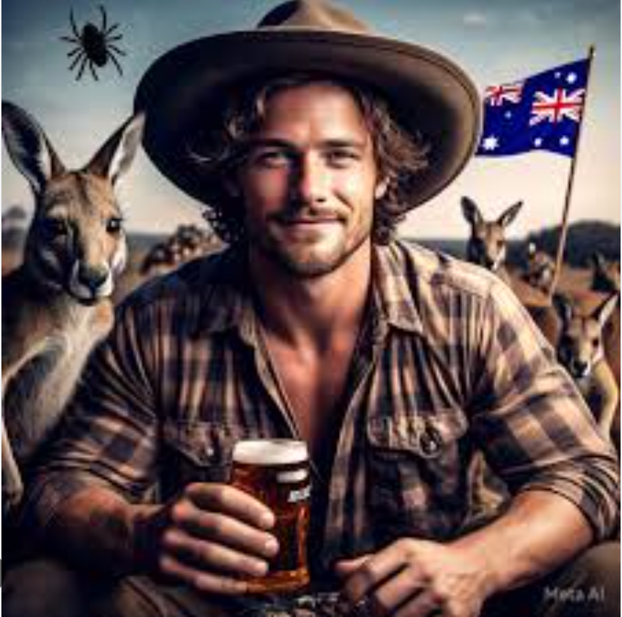
The homogenisation of Australian cinema to appeal to a more global audience is terrifying to me, because in a country with such a broad range of nuanced lived experiences, and such a drastic need for a medium through which to learn to understand and relate to one another, I fear any progress this country has made will revert backwards and our film industry will resemble that of an AI generated Australian man.
It will come as no surprise that numerous studies have consistently shown that consuming art, specifically fictional literature, film, and television, can prompt individuals to experience a heightened sense of empathy, as well as better social cognition and perspective-taking. This is why I keep returning to the cinema, and why a film like Pasa Faho gives me hope for the future: film (particularly when highlighting under-represented Australian stories) can capture the complexities of this country in ways headlines can’t.
Pasa Faho is distinctly humane. It tells the story of navigating a familial dynamic amid external chaos, something for better or for worse, most of us can relate to. Everything from the cinematography to the editing to the production design grounds us in reality. Your viewing experience is recalibrated to feel close to these characters, particularly Azubuike and his struggles. I couldn’t help but feel for the man on the screen, navigating a life in Australia, financial hardship and fatherhood, struggling to keep afloat and feeling the pressure to not let others see the cracks in his masculine armour, so to speak. Azubuike, along with the other shop owners forced out of business, represent a generation of working-class immigrants with limited resources who operate tirelessly day and night, in the hopes to provide a better future for generations to come.
These Australian voices and stories would otherwise go unheard or unnoticed. The work of director Kalu Oji, producers Ivy Mutuku and Mimo Mukii, and the rest of their incredible team has brought an otherwise untold story into the limelight and is a beautiful testament to the Australia that deserves to be seen on the big screen.

Comments ()