
Interview: Ruby Arrowsmith-Todd and the Sydney Cinémathèque
Cinémathèques, the special something in Sydney films and why we love Nicole Kidman
Conducted by Matthew Donlan
Ahead of the launch of the Sydney Cinémathèque at the Art Gallery of NSW, I had the incredible opportunity to pose some questions to its curator of film, Ruby Arrowsmith-Todd about cinema, curating, the cinematic qualities of Sydney, the local film community, Nicole Kidman and some hidden Australian film gems.
The Sydney Cinémathèque launches on Saturday 7 March at the Art Gallery of NSW with its 'Harbour City Cinema' programme dedicated to Sydney-based films and 'Our Nicole', a series showcasing the early works of Nicole Kidman. Tickets to most sessions are free with bookings highly recommended. Find out more and book here.
On how cinémathèques differ from general theatres...
Sydney Cinémathèque is a living school of cinema dedicated to celebrating film as an art-form. We offer a year-round program of screenings, talks and special events in a 340-seat theatre at the Art Gallery of New South Wales.
Sydney Cinémathèque builds on the importance of the Gallery’s long-standing film program in the city’s screen ecosystem. For over 25 years, we’ve been offering Sydneysiders free and low-cost access to the best of international and local cinema, from surveys of the Taiwanese New Wave and Weimar horror, through to thematic spotlights on outlaw movies, musicals (Choreomania), doppelgängers, con artists (Flim-flam), and extravagant flops (Folly).
Today, cinémathèques take many forms. Some are tied to film archives (Deutsche Kinemathek, Berlin) and museums (Cinemateca Portuguesa, Lisbon), while others exist as itinerant projects (see: French-Senegalese filmmaker Alice Diop’s ‘The Ideal Cinematheque of the Outskirts of the World’) or long-established screening programs, for instance the Melbourne Cinémathèque, which takes place once a week at ACMI. What unites these endeavours is a commitment to showcasing historically significant films alongside boundary-pushing new works. This curatorial mission – to entertain and educate on cinema’s global pasts and future directions – tends to distinguish a cinémathèque from profit-driven, commercial enterprises.
One of the things that makes Sydney Cinémathèque unique is our position within an art gallery. We treat cinema as an art-form akin to any other medium (sculpture, painting) displayed across the building. We care about presenting works in the best possible conditions, in seasons curated with intention and integrity. So when you come and see a film with us, you can expect a large auditorium equipped with a big screen, good sound and proper masking, a projectionist in the biobox tending a 35mm print whirring through our Kinetons, and more often than not, a full-house! We have an amazing community who attend our screenings each week – often multiple times per week – and I’m excited to see those audiences continue to grow with our expanded program. At the end of the day, cinema going should be a pleasurable experience. I’m keen to ensure that the Cinémathèque remains playful and welcoming, as well as a place to expand your viewing horizons.
The freedom of curating at a cinémathèque
Sydney Cinémathèque is fortunate to be part of a state institution with an explicit mandate to provide free/low-cost cultural experiences for the people of NSW. As Sydney’s theatrical ecosystem continues to contract (see: the recent closure of the Chauvel), the need for spaces dedicated to fostering screen culture is ever more important. Our relaunch as Sydney Cinémathèque signals our intention to continue to serve as a bastion for publicly-accessible, critically-engaged film culture in these challenging times for the broader sector.
As you suggest, curating with few commercial imperatives is liberating. While we do need to ensure that the Cinémathèque is self-sustaining, I’m able to approach film programming with a remarkable degree of freedom and experimentation. I can take risks on spotlighting film movements, regional cinemas and the work of directors beyond familiar Euro-American canons. I can foreground the challenging, the overlooked, the home-spun, the small-gauge, the bolt from the blue, and feel confident that I’ll find an audience for these sessions – even on a Wednesday at 2pm! One of the joys of free/low-cost programming is that it inspires adventurous moviegoing. We’ve built up an audience willing to take a chance on an avant-garde Brazilian silent film (Limite x Worlds Only) or a program of proto-anime 1930s Japanese paper films, which screened last year with musicians from Tokyo. I often have visitors come up to me after a film and say ‘I had no idea what to expect, but I loved it.’ The fact that so many of our screenings are free – and have been for over two decades – is actually quite unique worldwide.
On the choice to start with Sydney films and what makes them special...
I always wanted Sydney Cinémathèque’s opening season to celebrate the cinema from our own backyard. Local films don’t always get the dedicated focus programs they deserve, especially short films which may appear briefly on the festival circuit and then fade away. 'Harbour City Cinema' provided an opportunity to showcase some of the incredible work being made in Eora right now. Wherever possible, I’ve paired shorts by emerging directors alongside feature films by more established filmmakers. One example is Victoria Singh-Thompson’s intimate drama 14 in February (2023), which will play before Cate Shortland’s Somersault (2004) on 17 May. There are also two expansive short film programs spotlighting exciting new waves of local talent. I’m keen to make sure that Sydney’s filmmaking community feels at home at the Cinémathèque – it should be a meeting place, a space of inspiration, a generator of new ideas.
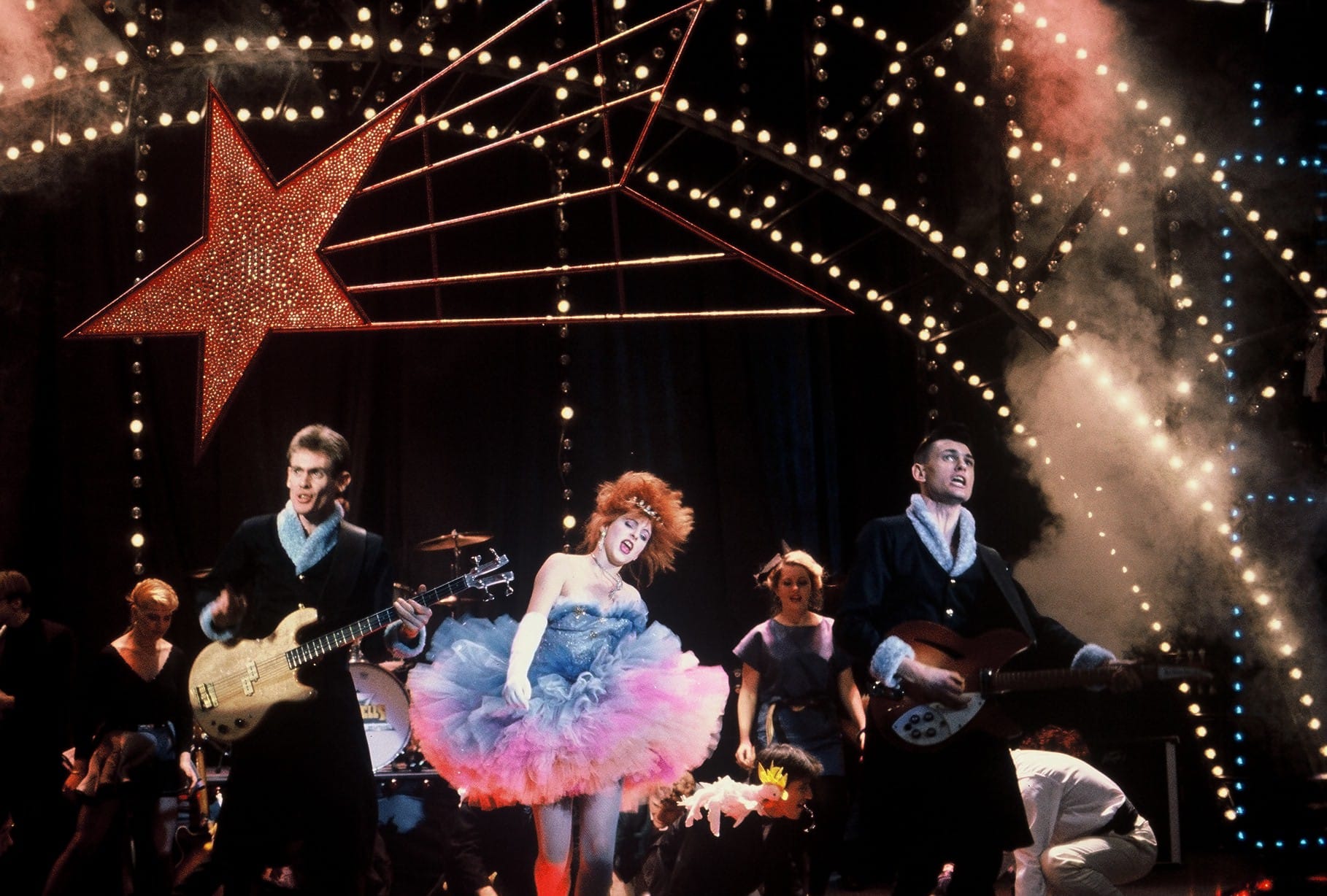
There are so many ways you can tell a history of cinematic Sydney. Compared to the gritty, urban cool of Melbourne cinema, Sydney films tend toward big-budget glitz, kitsch, and a certain camp bombast. The extraordinary splendour of the city’s natural landscape – its harbour and iconic landmarks – certainly informs this sensibility. I’ve included several films that epitomise this spirit, films like The adventures of Priscilla, Queen of the desert, Strictly ballroom and Muriel’s wedding that I’m sure will be very fun to watch with a hometown audience.
Alongside these more iconic, sun-splashed titles, I was keen for the series to explore how vice and violence has undergirded the dazzle of the city and its cinematic archive. As I often discussed with my friend, the late critic Ross Gibson, Sydney has been enveloped by a ‘fist of exploitation’ since colonisation, through land grabs, grift and greed. It’s a city constantly revising, erasing and reinventing itself, and there are several films in the program that reckon with gentrification (Heatwave, Rocking the foundations) as well as the harbour town’s underbelly of crime (Two hands) and corruption (Stone).
Finally, I wanted this season to highlight lineages of independent, underground filmmaking that have thrived in the city since the 1960s. We sometimes associate older Australian films with earnest costume dramas or dun-coloured pastorals. But that’s only part of the picture. 'Harbour City Cinema' reveals an overlooked strand of DIY Sydney cinema – vital viewing for anyone making movies outside the mainstream today. I encourage everyone to check out films like Going down (1982) or Tender hooks (1988) and our session celebrating the work of the Sydney Filmmakers’ Co-op on Sunday 29 March.
The strength of the local film community...
Over the years, we’ve built a wonderful community around our cinema: audience members, artists, filmmakers, critics, musicians, students, scholars. I wanted to celebrate those relationships and also shine a light on some of the great work being done by fellow independent screen collectives and film organisations across the city. I see the Cinémathèque as part of a mutually enriching and supportive ecosystem. As someone who has closely watched the city’s network of screening spaces expand and contract over the years, I feel we’re in an exciting period of momentum. I see growing audiences. I see smart, homegrown critical writing and the establishment of new platforms such as this one and nosebleed.sydney, among others. I see new film clubs popping up every other week. With 'Harbour City Cinema', I wanted to celebrate that grassroots energy and acknowledge the collective work it takes to build a poly-vocal film culture in a city.
We’re also blessed to have incredible creative talent living in Sydney. It was a pleasure to be able to invite directors such as the renowned documentarian Tom Zubyrcki to participate in a Q&A after a rare screening of his film Billal (1996). Or to invite Claudia Karvan to reflect on the t4t rom com Dating the enemy (1996), or to facilitate a chat between Mia Wasikowska and Samantha Lang on the feminist psychodrama, The Well (1997). By engaging with different sectors of the industry, we hope to cultivate a sense of collective ownership of the Cinémathèque. From the response we’ve had so far, I’m heartened by how invested the community already is in what we’re planning for the future.
Why the special focus on our Nicole?
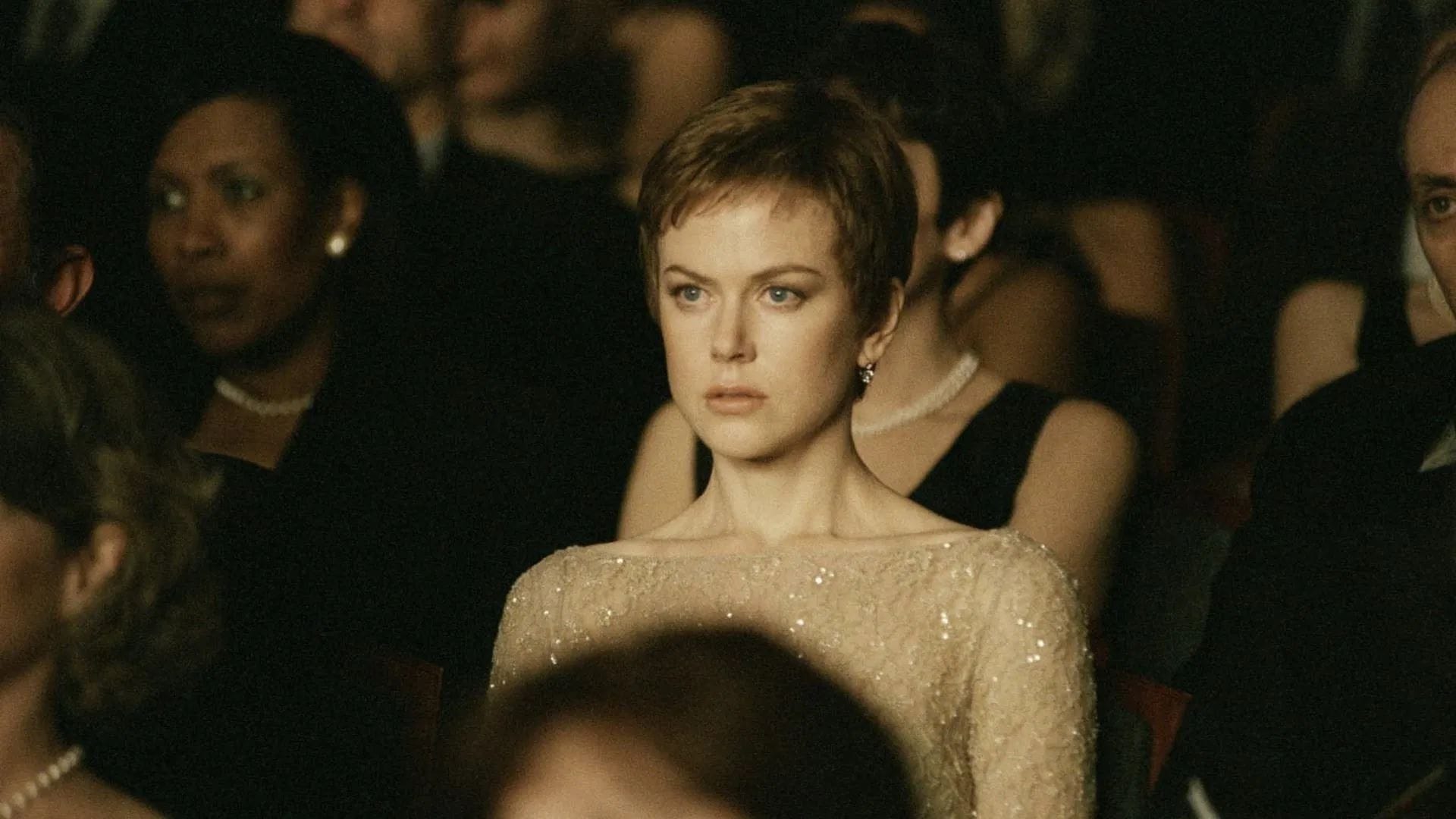
I’ve been wanting to curate a Nicole Kidman retrospective for a while now. In my opinion, she’s one of the few contemporary actors who commands the mythology of Hollywood divas of yore. She’s a camp icon. A meme queen. A capital s Star. The opportunity for this season arose alongside 'Harbour City Cinema'. Kidman is one of Sydney’s most famous exports, a north shore teen who became a megastar at the height of ‘90s tabloid culture. Sydney-ness is a big part of her story – she often recounts skipping out on beach afternoons to attend theatre classes in the city on weekends or to watch arthouse movies.
With this season, I wanted to zoom in on Kidman’s early trajectory and consider her transformation from teen wunderkind popping wheelies on Manly foreshore to glamorous Hollywood muse. Spanning BMX Bandits to Birth, the season showcases a remarkable run of work with one auteur after another, including Jane Campion, Gus Van Sant, Stanley Kubrick and Jonathan Glazer.
By isolating this early moment in her career, we glimpse the development of a serious, independent-minded artist with an uncompromising commitment to her craft (there are many stories about Kidman’s method-like intensity on set). It’s cliche to describe a female actor’s choices as ‘brave’ or ‘risky’ but such sentiments seem warranted when considering Kidman’s early roles. Across this season, she plays grieving mothers (Dead calm, The others), suffering heroines (The portrait of a lady, Moulin Rouge!), a shackled fugitive (Dogville), depressed writer (The hours), party-girl witch (Practical magic) and a cunning weatherwoman (To die for). I love her range. I love her appetite for misery, her openness to plumbing the depths of the female psyche in complex roles. And I’m fascinated by the ways in which she continues to self-consciously play with her star persona, offering knowing winks to the artifice of performance.
We’re lucky that Nicole has recorded a short introduction for Sydney audiences that will play before each session across the season.
Hidden Australian films gems
One of my favourite pairings in the 'Harbour City Cinema' program is Lawrence Johnston’s Eternity (1994) and Stephen Cummins’ Resonance – two of the most beautiful, black-and-white films ever shot in Sydney. Exquisite visual style best appreciated on the big screen. I also recommend our session dedicated to the kaleidoscopic films of experimental legend, Paul Winkler. A similar screening – with the 86-year-old director in attendance – is unlikely to ever be repeated.
Bonus: a non-exhaustive list of Sydney films that, for various reasons, I couldn’t fit into the 'Harbour City Cinema' program:
- Whatever happened to Green Valley (1973) – residents of a housing commission estate in western Sydney seize the means of production and make short films about their daily lives under the direction of Peter Weir.
- The pyjama girl case (1977) – maybe the only Italian giallo shot in Sydney. Sleazy pulp procedural inspired by a real-life 1930s murder, lurid Amanda Lear soundtrack, unforgettable final shootout at Waverley Cemetery. A film in rights limbo.
- Our lips are sealed (2000) – Mary-Kate and Ashley Olsen in a witness protection program down under. Millennial catnip.
- Love letters from Teralba Road (1977) – beautiful short feature by Stephen Wallace based on letters he found in a Sydney flat in 1972.
- Palisade (1987) by Laurie McInnes. If you ever have a chance to watch this film, don’t miss it.

Comments ()