
Wolfram by Warwick Thornton (2025)
Less of a sequel and more of an antidote...
Watched by Matthew Donlan at Ritz Cinemas
The Australian bush fly is attracted to the sweat, saliva and tears of mammals, particularly humans. They also love to breed in the dung of livestock. Similarly, the blow fly and flesh fly are drawn to fresh corpses. Mere hours after death, these insects swarm and lay their eggs in the body's orifices. In other words, flies are synonymous with stench, rot and decay.
So what does it say then when a fly plague hits your town? When every horse, human and piece of food becomes coated with a buzzing black swarm?
Warwick Thornton's sequel to his 2017 film Sweet Country reveals what keeps the flies around. Wolfram is set four years after the harrowing end of Sweet Country and, although it retains some of the characters, is largely a new story based on true events.
In 1932, young Indigenous siblings Max and Kid are forced to work for the grumbling and aggressive Billy in the wolfram (tungsten) mines. Their mother, Pansy (Deborah Mailman) fled Billy's violent hand and now travels the land with Zhang, a Chinese miner, and their newborn baby. Meanwhile Mick Kennedy and Philomac (now a young adult) receive a visit from a conniving pair of outlaws, Casey and Frank, looking to make a quick buck.
After escaping from Billy's control, the two young children, along with Philomac, set off on a search for their mother while avoiding the ire from Mick and his new friends. The group and their chasers receive help and hinderance from the land and its people in a chase of survival.
In Thornton's own words, Wolfram is less a sequel and more a 'bookend' to Sweet Country, acting as the film's antithesis and coda. And while the narrative conclusions of the two films stand apart, the violence persists. Casey is the embodiment of this evil. He is the unfiltered racist and misogynist against anyone who isn't a white male, and even then, he prefers to exert his power over them where possible too. But the social evil has also evolved into the capitalistic exploitation of Indigenous children for profit, putting them to work in the mines. It is a shameful but necessary inclusion in the film which tells an untold story of this country's racist past.
Wolfram is a film of contrasts. From sound to cinematography, narrative and characters, Thornton draws out the divides to then unify the threads by the film's end. The story itself is, somewhat unnecessarily, delineated into four parts, all the while flitting back and forth between the children, their mother and the white men. By doing so, we are consistently reminded of the stakes and the goal for each as they slowly move closer to each other. The edit helps tie these strands together with flickers of beauty right before or after evil. This happens too with the sound design. The noise of Australia's land (cicadas, flies, rain storms) rise in intensity and become overbearing, acting like a harbinger. In these short and simple moments, Thornton effectively builds and releases tension, as if to point to an inevitability that all are desperate to avoid again.
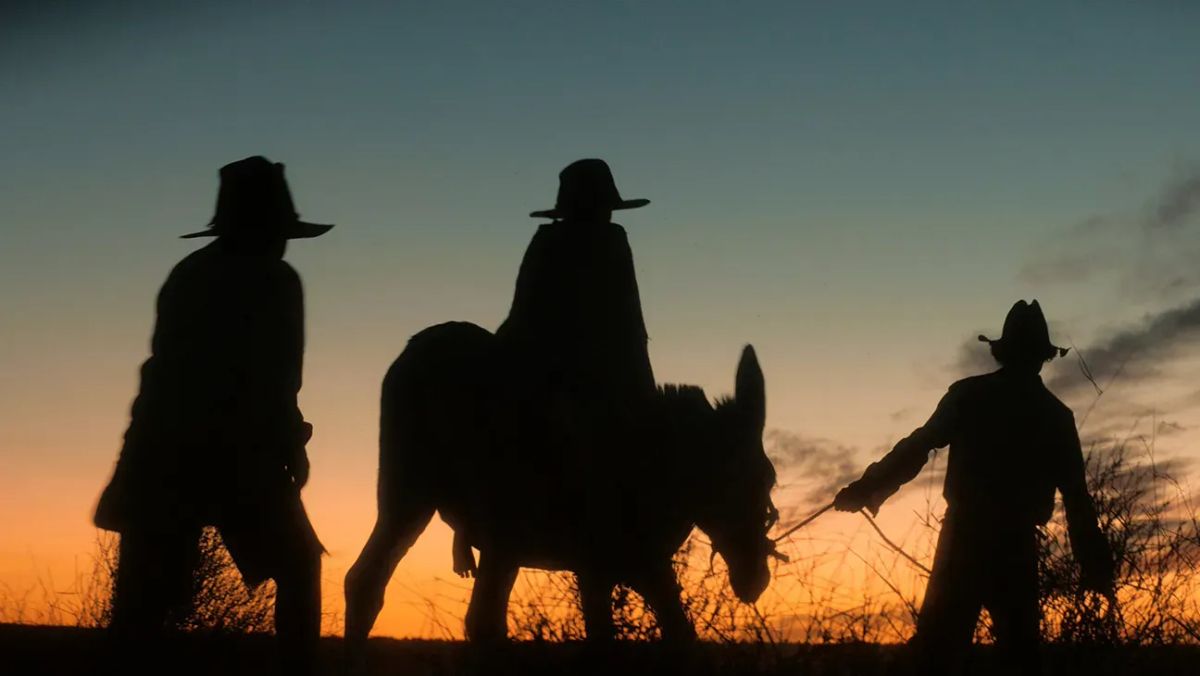
But the real standout is in Thornton's own camerawork. The sun, a usual enemy for any cinematographer, is Thornton's friend here. He plays with its rays to full effect either by pointing the lens directly in its path, letting the full frame be blinded by a white light, or by letting it highlight the colours of the land. In this latter move, Thornton silhouettes bodies trekking across the desert, revealing just how small we are against the vast beauty of a golden sunset.
By the film's end, the flies are no longer to be heard or seen. And while we know the stench of racism is still present, at least for this moment we can celebrate.
Wolfram opens in cinemas tomorrow.
Pick of the Week
This week's pick goes to the Fantastic Film Festival! With an exciting programme of vampire classics, J-horror hits and some wild participatory viewing experiences, this is the ideal place for lovers of the weird and underground. Check out the films here.
New Releases
- Wolfram (Warwick Thornton) AUS
- Hokum (Damian McCarthy)
- It's Never Over, Jeff Buckley (Amy Berg)
- The Devil Wears Prada 2 (David Frankel)
Looking for the weekly guide? It's relocated into the regular newsletter. Subscribe to get curated recommendations or follow the Fleapit on Instagram to see the highlights of each week!

Comments ()