
Interview: Sample People (2000)
25 years after it was last screened, Sample People returns to Sydney...
Conducted by Matthew Donlan
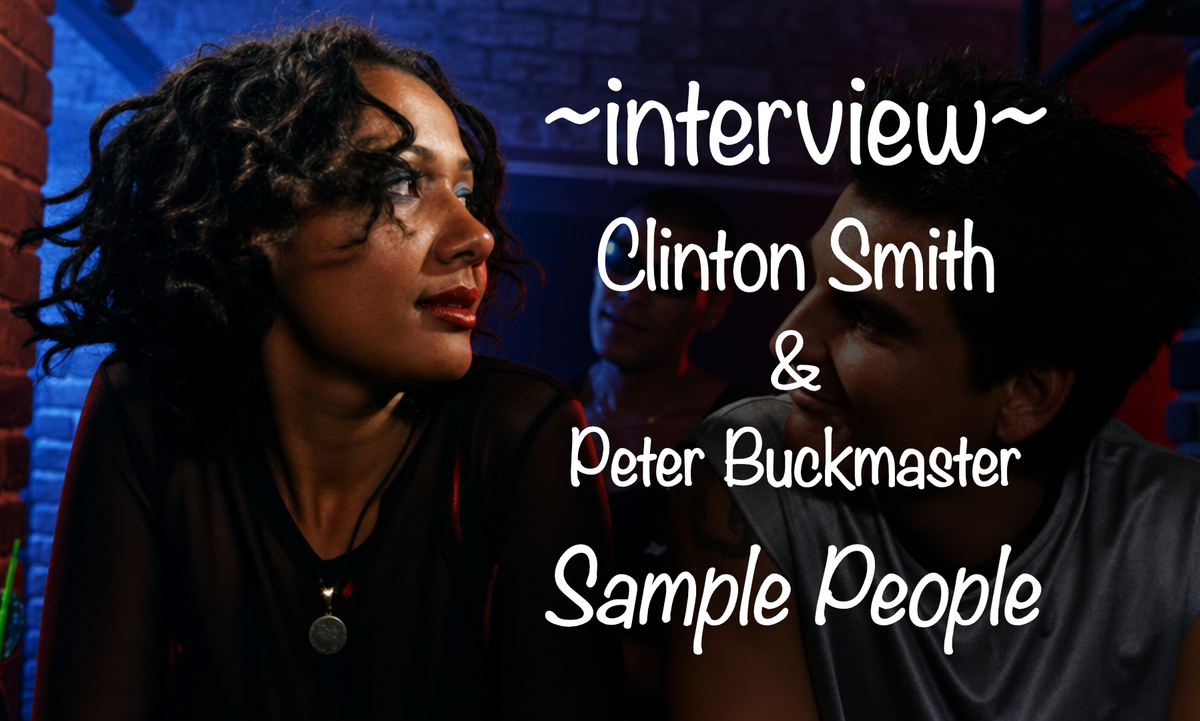
Sample People is a chaotic and pulsing dive into Sydney at the turn of the millenium. First released in 2000, the film stars Ben Mendelsohn, Joel Edgerton, Kylie Minogue and more Aussie stars for a summer weekend in the Emerald City. The film screens publicly for the first time in 25 years at the Sydney Opera House. I had the pleasure of chatting with writer/director Clinton Smith and co-writer Peter Buckmaster.
Firstly, thank you for joining me. I want to go back to the very start, 26 years ago, to Sydney in the year 2000. Could you describe what the city and culture was like?
Peter Buckmaster: 2000 was post the millennial bug so there was this weird optimism and cynicism that came out on the other side. I remember New Year's Eve 1999, and a lot of people disappeared out of Sydney because they thought the world was going to end, or the machines were going to take over. Once we got through that, and then had the Olympics in Sydney, it suddenly became a global city.
Then this other weird thing happened where more people left Sydney than arrived. You could get a car park, you could go into a really good restaurant and get a table, and everything worked because they coordinated it and fixed all the traffic lights. It was a very optimistic time.
It was all the other decades coming into one and Sydney was more of a hub. The film is set in King’s Cross and Newtown; they were our primary hangouts. It was all centred around there. Nowadays it's more stretched out.
Clinton Smith: Well yes there was this optimism moving through the 90s but everyone was really worried. Were all the computers going to turn off with the Y2K bug?
Then there was this hyper bubble of the internet that was going on, which was a lot of the optimism. But for us we were in our mid 20s when we conceived the film. We started writing it in the mid 90s and started making it around ’98. It was very much impacted by what was going on in the 90s. There were obviously winks at the fashion of the time but also where things are headed.
It was all about leading up to 2000, that absolute eclectic chaos right up to the cusp of the millennium. The reason we called it Sample People was because I felt we were living in this high speed, post-modern pop culture regurgitator where young people were constantly sampling cultures. Musicians at the time were sampling beats and sampling other parts of other people's songs so that's why it was called Sample People.
Speaking of the film it's described as fast paced and electric, and there are the comparisons to Go (Doug Liman, 1999) and Human Traffic (Justin Kerrigan, 1999). You're talking about that energy of the culture; the sampling and remixing. Could you talk about the style of the film and its origins?
PB: When we started the script, it was 62 pages and we had maybe more than 18 characters. At the time we were squeezing everything in because it was this fast-paced thing. The idea really started around Sem (Joel Edgerton) and Cleo (Paula Arundell) and then it filtered off into parts inspired by Clinton and his circle of friends.
I think I watched the film years later and I was like “man, have they edited this film?” Because it goes really fast. But no, that’s the way we made it.
It was reflective of our lives and these stories that come crashing together. When we were talking about it, the ending in the initial film, everyone died. I think we were a bit too French. We had watched Queen Margot (Patrice Chereau, 1994) and the scene on the Night of Bartholomew where everyone gets killed.
CS: I also think we were heavily influenced by the Tarantino multi-threaded narrative. Before that, people weren't really doing it. Back then you wouldn't get funding for a genre film. You had to make a film that was a drama which spoke about your context. Arguably that's what we did, it was an amplification of our lives.
Rather than make one specific genre film, it was like we were trying to bring four genres together. When you put all those different stories into the one story, you get away with it.
Peter can tell you the story about how we went to one of the pubs in Newtown and played the vinyl there. Does that answer the question where it came from a perspective?
Absolutely! You mentioned some of the cast that are in this; Ben Mendelsohn, Kylie Minogue, Joel Edgerton, David Field, Paula Arundell. Having them onboard, did they influence the script or characters? Were they bringing their own perspective to things?
CS: I did a lot of musical theatre so with that, once we had the cast, I was able to talk to them in their language about owning the characters and owning the script.
They all came from that understanding that you can really work up characters. They were keen because we let them really inhabit the characters. In rehearsals, the natural frictions of what the different characters were wanting to achieve in each of the scenes come out. That really helped because on the day we spent hours setting up each shot, and we're pushing hard and moving fast. I only had like 1 or 2 takes per shot, and I didn't have a video split to kind of watch back, so I had to trust that we got it and that level of involvement with them in the lead up gave me confidence that we were nailing it.
The film is coming back at the Sydney Opera House for the STROBE Film Festival, and it’s described as being recontextualised. For those who haven’t seen the film, what can audiences expect? And perhaps more broadly, how do you think the film speaks to people today?
PB: It’s quite reflective of the time. You have people like Peter Weir and his back catalogue, like Picnic at Hanging Rock (1975), doing 4K scans and going back out to the cinemas. For me, that film is reflective of its time and so is this one.
It’s got a real analogue feel that influences the film. The other factor is that it’s classic storytelling, it's a time capsule of the time. It’s a 96-minute film and even in that it’s a different thing when you look now at streaming and the internet. Clinton what do you think?
CS: I agree with all of that. An audience can go there and see this high-octane time capsule that we're trying to capture on film. My daughter is 17 and she loves it. They’re experiencing a similar thing that we were experiencing that we tried to capture on film. The way technology is working now is creating these echo chambers of cultural appropriation and tribalism. This film speaks about that from a 90s perspective so they can understand that. And they’ve been raised by Gen X so they’ve got that 90s punk mentality.
And you mentioned earlier, going back and looking at these great early performances by some now phenomenally huge stars. You look at the film and they're so young. You can just see why they were going to end up where they are because they're just so awesome.
We’ve got a little bit of time left so I am curious Peter about this story about playing the vinyl in Newtown.
PB: Well, we used to hang out and write. At the time it was at each other’s place, but part of it was hanging out in this pub. When you talk about the style of the film, that was definitely an influence. We were looking at people, and they’d actually dress up as well. The soundtrack is bloody phenomenal on the film, and all that was sitting on this vinyl in this old jukebox close to the pool table.
So, we’d just sit there and write but then we had this influence coming through. Newtown is one of those places that hasn’t changed at all but has changed a lot.
Final question, and I ask everyone this. We like to celebrate underrated films and hidden films here at the Fleapit. What are some films that you want people to know about?
CS: Okay, I've got a few. The Proposition (John Hillcoat, 2005) is an Australian film. It's written by Nick Cave and stars Guy Pearce. What I loved about it is it really deserves a legendary status because it recontextualises the Western style genre film in the Australian outback and I just think it's awesome.
You’ve got Ghosts… of the Civil Dead (John Hillcoat, 1988) and The Boys (Rowan Woods, 1998). But I won't go into them.
People talk about the greatest film noir ever, and they go through them all, but they don't talk about this hidden Brian De Palma with hidden Al Pacino, but Carlito’s Way (1993) deeply affected me, and I think it’s an awesome film. It’s not spoken about much, but it's an absolute masterclass in the dark anti-hero genre filmmaking. If you think about the TT character, that sort of film influenced that part of Sample People.
Another film which people would not have heard about enough, is a Spanish horror action comedy which I absolutely love, which is called The Day of the Beast (1995) by Alex de la Iglesia. It's a classic mash up film of ideas and genres. It’s smart, it's deeply funny, but it's also horrifyingly overlooked.
PB: I remember seeing Carlito’s Way with you at the cinema at the time and that was an influence that I had forgotten about.
I was heavily influenced by David Lynch. Obviously, he had Eraserhead (1977), but Blue Velvet (1986) was one of my all-time favourite films, and that's had an influence in Sample People. The great Dennis Hopper performance and that dark underbelly that goes through the film.
And then classic ones like Death in Venice (Luchino Visconti, 1971). Every time I watch that it's one of my favourite films. It’s such a beautiful film. It’s quite evocative.
CS: You just reminded me Pete, Le Samourai (Jean-Pierre Melville, 1967). It’s a French noir film; that’s one of my favourite films ever. It looks like it's shot black and white, but it's not, it’s just art directed perfectly. Which, if you think about Sample People, a lot of people don't know this, but each of the stories had a specific colour palette. Each story had only three colours each.
PB: That’s true, which is funny because when we were regrading it, people were like “oh the reels are different colours” and we’re like “that was deliberate”.
The one last thing I'm going to mention is a trashy one that failed at the cinema, but I used to show it to my film students in terms of a well-crafted film is Explorers (Joe Dante, 1985). It had River Phoenix and Ethan Hawke who build a spaceship to go into outer space to meet aliens and discover secrets of the universe. They spent millions on the film, and it made nothing, but it is a well-crafted film and trashy.
Thank you so much for joining me. And best of luck as well for the screening at the Sydney Opera House.
Wonderful. Thank you so much.
Sample People screens at the Sydney Opera House on Friday 4 September. Details are available here.
Pick of the Week
This week, I recommend you head out on Tuesday night for either the mystery screening at Golden Age, or the free public screening hosted by AFTRS.
New Releases - Thursday 27 August
- I Want Your Sex (Gregg Araki)
- Palestine 36 (Annemarie Jacir)
- & Sons (Pablo Trapero)
- The Dog Stars (Ridley Scott)
- Tina Arena: Unravel Me (Adrian Russell Wills)
Want a weekly guide that tells you what's happening on Sydney screens? Subscribe (for free) to get hand-picked recommendations or follow the Fleapit on Instagram to see the highlights of each week!

Comments ()